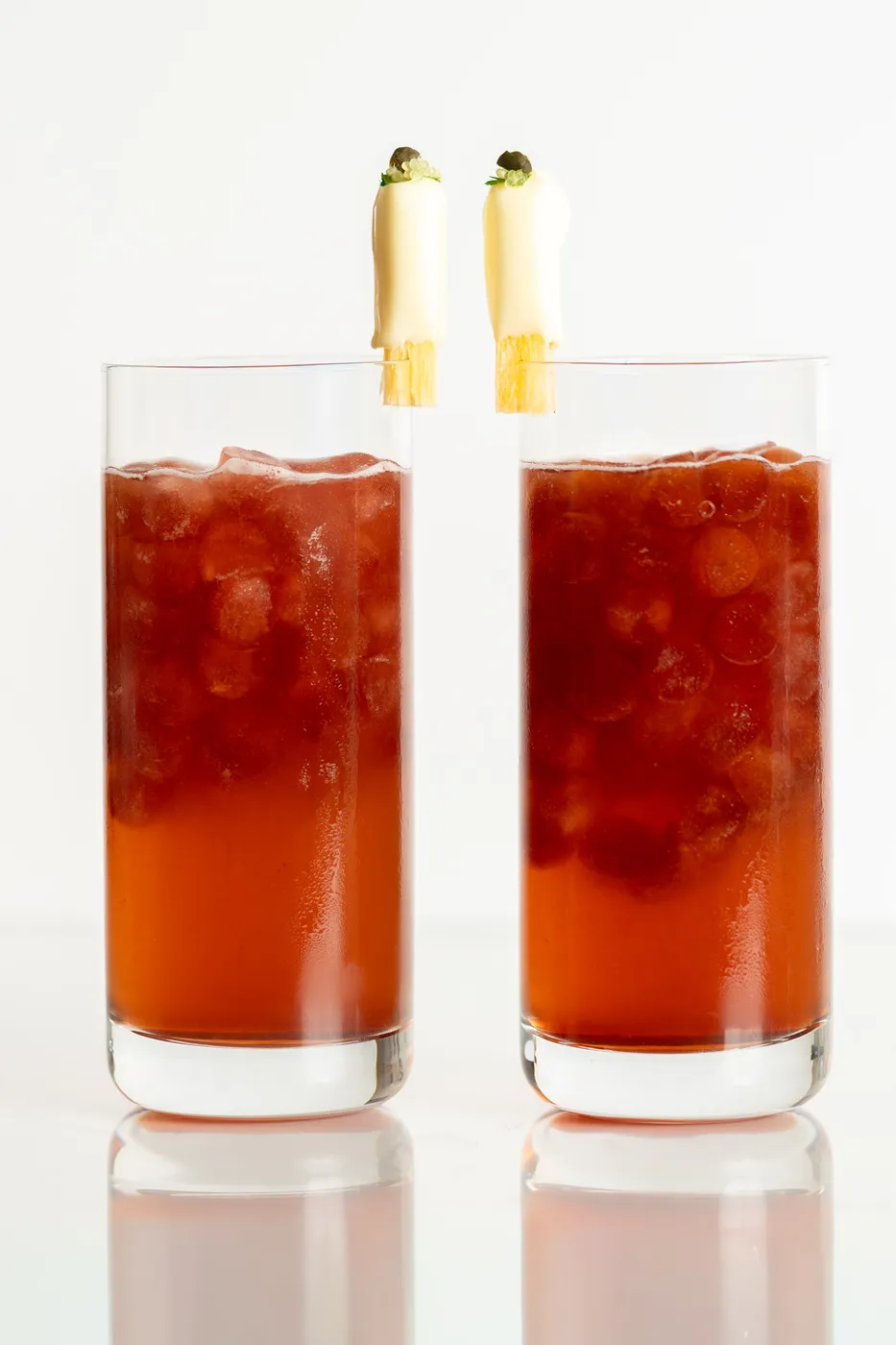
Joseph's Cane
Sugar Cane · Habañero · Cherry
Let’s face it—this isn’t the type of cocktail project where you can root around your fridge and ask, “What are we going to make tonight?”
The odds of having all the specialty produce, liquor, modifiers, and gadgets you’ll need to make an Aviary cocktail are not always favorable. Unless, that is, you’ve just received a two-pound crate of fresh finger limes that will dry out if you don’t use them quickly. My options were to waste a hundred of these precious fruits that were just shipped to me days prior or…well, do something with them. Fresh off the heels of making Bring Another Smurf!, this was where I found myself just days before a family vacation to Glacier National Park.
Ideally, I would have planned this so that I wasn’t sitting on a surplus of perishable goods that needed to be used before traveling. I’d known about this trip for months, and I knew I’d need finger limes to make Bring Another Smurf! with Brad and Angie from The Aviary Cocktail Project on their visit one week before our vacation. What I hadn’t taken into account was a substantial increase in the minimum order volume of finger limes since the last time I ordered them.
Last fall was the first time I purchased finger limes to use in Chamomile. The fresh finger lime cells were used as one of the garnishes in the edible cocktail. With a relatively small volume of finger lime cells used per portion, I only needed a few to do the job. The minimum volume at the time was around one pint, which was more than enough for my garnishes. In Bring Another Smurf!, I needed 80g to make the coconut finger lime cordial plus a few more as a garnish. All in all, this amounted to around 12–15 finger limes, and I anticipated ordering one pint to cover this.
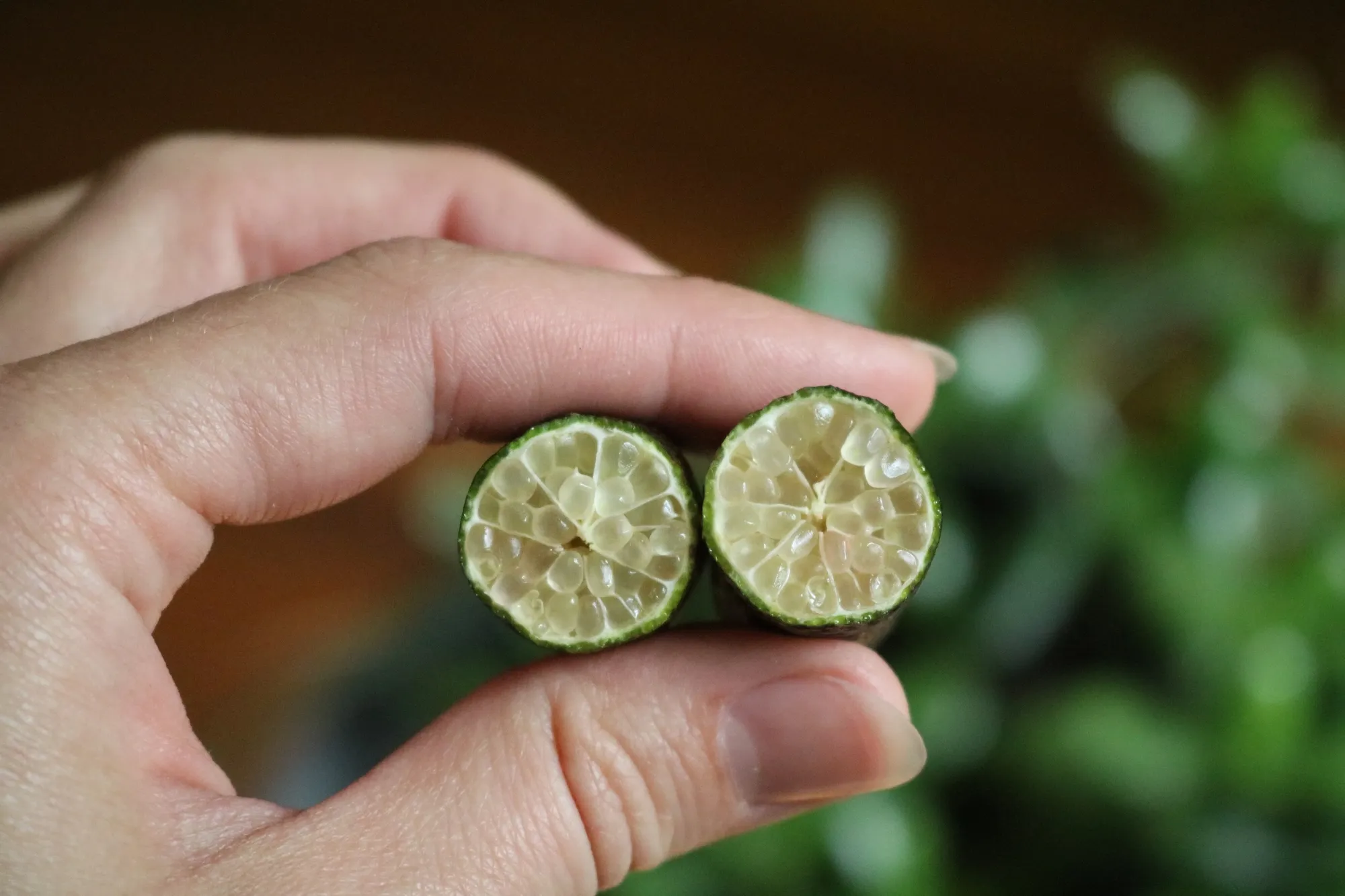 A big burst of flavor from such a tiny fruit.
Photo: Angie Boyd
A big burst of flavor from such a tiny fruit.
Photo: Angie Boyd
When I went to place my finger lime order online, I learned that the minimum order had increased substantially. I now had to purchase a two-pound box to obtain my 12–15 finger limes. (For reference, a two-pound box contains 120–150 fruits.) The folks at Shanley Farms already did me a solid by shipping this crate a few days before they opened shipping to the public so it could arrive in time for Brad and Angie’s visit, so I didn’t feel like pushing the issue to get an exceptionally small quantity. That left me with a lot of extra fruit.
Luckily, there was time to plan for this. There are five cocktails in the book that call for finger limes. However, none of these cocktails is particularly easy. With Chamomile and Bring Another Smurf! already made, that left me with three options. Clear & Clement requires a rotary vacuum distiller, which is a $1,000+ piece of equipment I don’t own, and learning to distill is not a skill I want to learn under a time crunch. Each serving of How Does Snoop Dogg Use Lemongrass? requires two pieces of custom glassware and the use of liquid nitrogen. Not the kind of cocktail I could deliver on a moment’s notice. That left me with Joseph’s Cane.
Joseph’s Cane uses finger limes both as the base of a finger lime cordial and as an embellishment atop the semi-edible (chewable?) sugar cane garnish. It’s really unique in terms of its assembly: a carbonated base comprised of finger lime cordial, lime juice, cachaça, banana liqueur, and spicy bitters. The base is force-carbonated and poured over a glass filled with ice marbles flavored with red verjus, Cherry Heering Liqueur, and balsamic vinegar, then topped with champagne. The cocktail is garnished with a white chocolate-dipped sugar cane infused with more cachaça, then topped with a small cilantro leaf, a cluster of finger lime cells, and a single caper sliced in half.
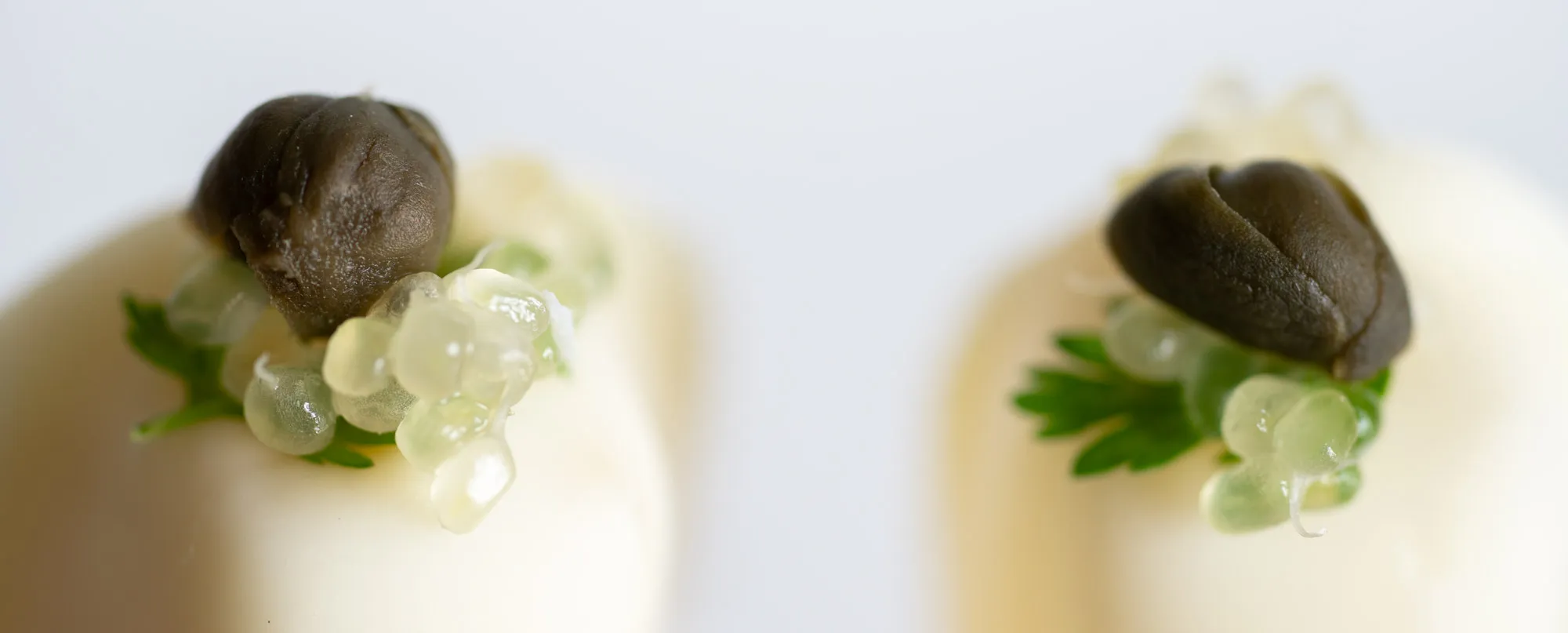 Caper? I hardly know her!
Given the tight timing of everything, this might have been a great second cocktail to make with Brad and Angie. But as I mentioned before, even in a refrigerator that is disproportionately filled with Aviary cocktail ingredients, I was still a few items short during their visit, and the bitters and CO₂ cartridges both needed to be ordered online and didn’t arrive in time. I also used this shipping delay as an opportunity to replace my Fizzini for the second time, as the internal mechanisms tend to get clogged with sticky cocktails and break down over time. As was the case for the first Fizzini replacement, I had to order this secondhand on eBay, as the Fizzini has been discontinued for years and I haven’t found a substitute I love.
My favorite part of the cocktail was the compressed sugar cane garnish. Even before it was dipped in white chocolate, these two-inch batons were incredibly flavorful. I put them in a small food storage container and covered them with cachaça before activating and releasing the vacuum. When activated, the batons appear to be boiling in the liquid, when in reality, it’s the tiny air pockets in the sugar cane being emptied by the pressure of the vacuum. Once the pressure is released, all the space previously occupied by air is flooded with cachaça, and the end result is a juicy, delicious bite. (Or is it a delicious gnaw? You can’t actually eat the sugar cane segments—you chew them until they’re dry and then daintily discard the fibrous remains into a cocktail napkin.)
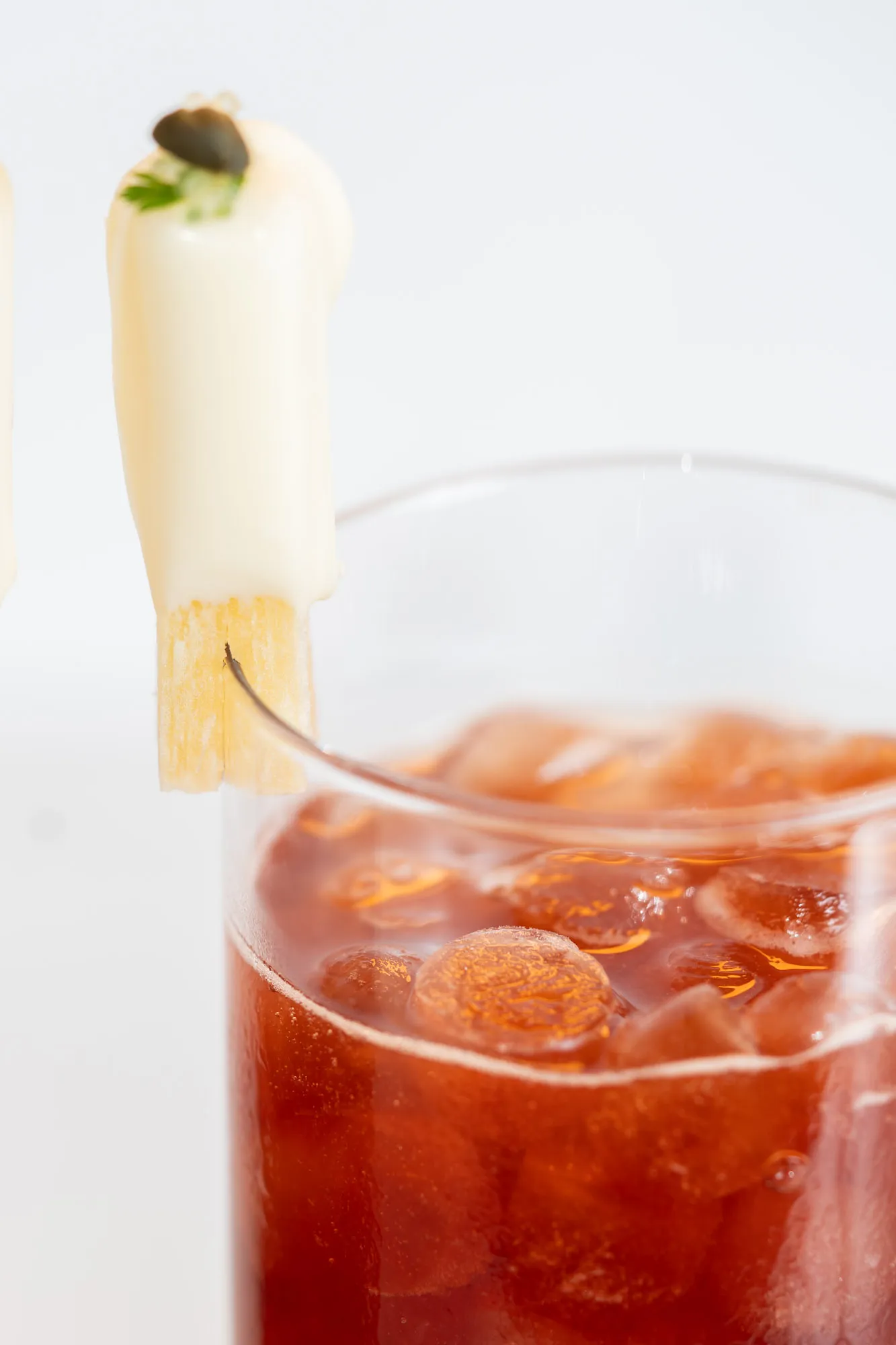 This compressed cachaça-infused sugar cane was the star of the show.
This is maybe the fourth time I’ve used the vacuum chamber to compress an ingredient, and each time I wonder if simply soaking the solids (pear cubes, celery stalks, mustard seeds) would have been sufficient. After all, vacuum chambers are expensive, bulky, and a bit dangerous if not used properly. Why call for this step if you can achieve a similar outcome with a simple soak?
I’m far from being a scientist, but from what I can tell, the answer is twofold. If you were to soak a cube of pear in juice long enough for it to be deeply infused, you’d end up with mushy pear bits in a pool of dull-flavored juice. Compression allows you to preserve both the integrity of the solids and the brightness of the liquids (often made with fresh fruit and vegetable juices). If you’ve ever tried day-old citrus juice, you know the difference between the dull taste of juice past its prime and the bright, aromatic taste of fresh-squeezed. In the case of sugar cane, I believe the benefits of compression have more to do with the density of the cane than the brightness of the liquor. While you can get a lot of flavor from gnawing on a piece of sugar cane, its woody texture makes it a difficult candidate for more natural means of infusion. Compression allows you to achieve that deep flavor quickly even if the toughness of the sugar cane and the flavor of the cachaça would otherwise remain stable.
I have to say, Joseph’s Cane instantly won a place in my Top 10 Aviary Cocktails list. I love the funky depth of cachaça, and it paired perfectly with the Jamaican rum-spiked finger lime cordial. The cherry ice marbles were balanced by the Fusion Verjus Rouge and balsamic vinegar so as not to be cloying, and the effervescence from the champagne and the force-carbonated cocktail base made everything lively and refreshing. The white chocolate sugar cane garnish was delicious, and the small pop of flavor from the finger lime, cilantro, and caper further complemented the depth and funkiness of the cachaça. For being a bit of an afterthought, Joseph’s Cane ended up being one of the best cocktails I’ve sipped in a long time.
This drink was made on a Wednesday night, and we left the following afternoon for Montana. It was also made the same night as my remake of Bring Another Smurf!, done so I could redeem the poor quality of the photos I took the first time. I started the dishwasher and hopped into bed around 12:30 AM after working on these two cocktails for a solid eight hours. While the end photos looked as good as I hoped they would, the rush to assemble, stage the photos, and tear down meant that I neglected to take photos of the preparation. This was perhaps for the best: the kitchen was a disaster, with every available surface used for preparation and staging, and I was sweating bullets as my struggling air conditioner barely managed to keep the house below 80 degrees.
In lieu of prep photos, I’ll leave you with something a bit more personal. Sunday was our 12th wedding anniversary, and since we were hosting guests that weekend, we opted to celebrate a week earlier. The two cocktails I made were for Abe and me to have one last toast before our trip. Below are a couple of photos from our wedding day 12 years ago, held in a small park just a few blocks from our home.
 We had Voodoo Donuts instead of a wedding cake. They were so good!
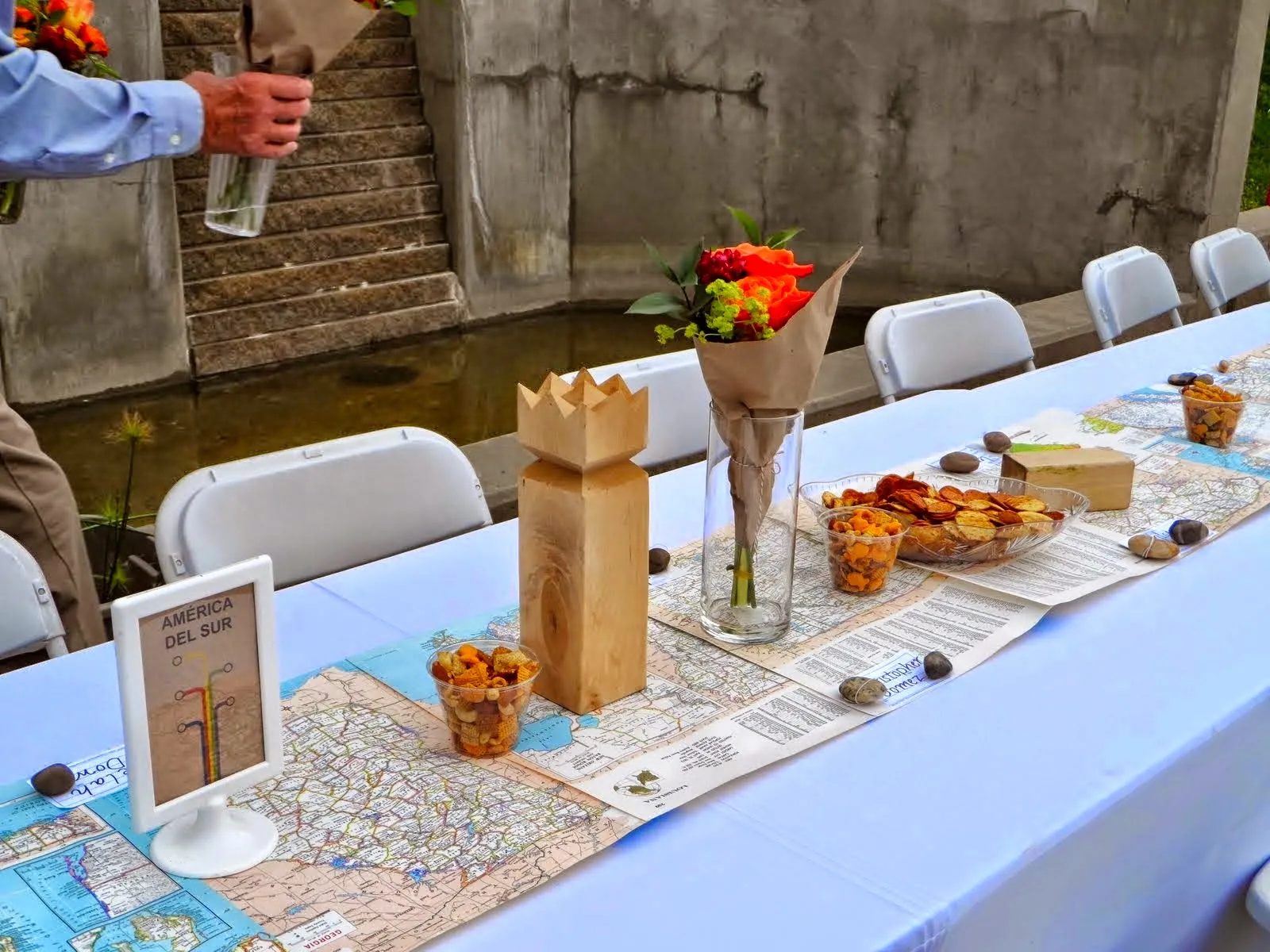 As a native Iowan, if you don’t serve your mother’s famous Chex Mix at your wedding, your marriage isn’t considered legally binding.
 One of my vows was to always remember when it is time for us to eat. Twelve years in and I have never failed.
Thanks for reading.
Whether you're a fellow home bartender, photographer, writer, collector, or simply enjoyed the story, I'd love to hear from you at hello@gayviary.com.